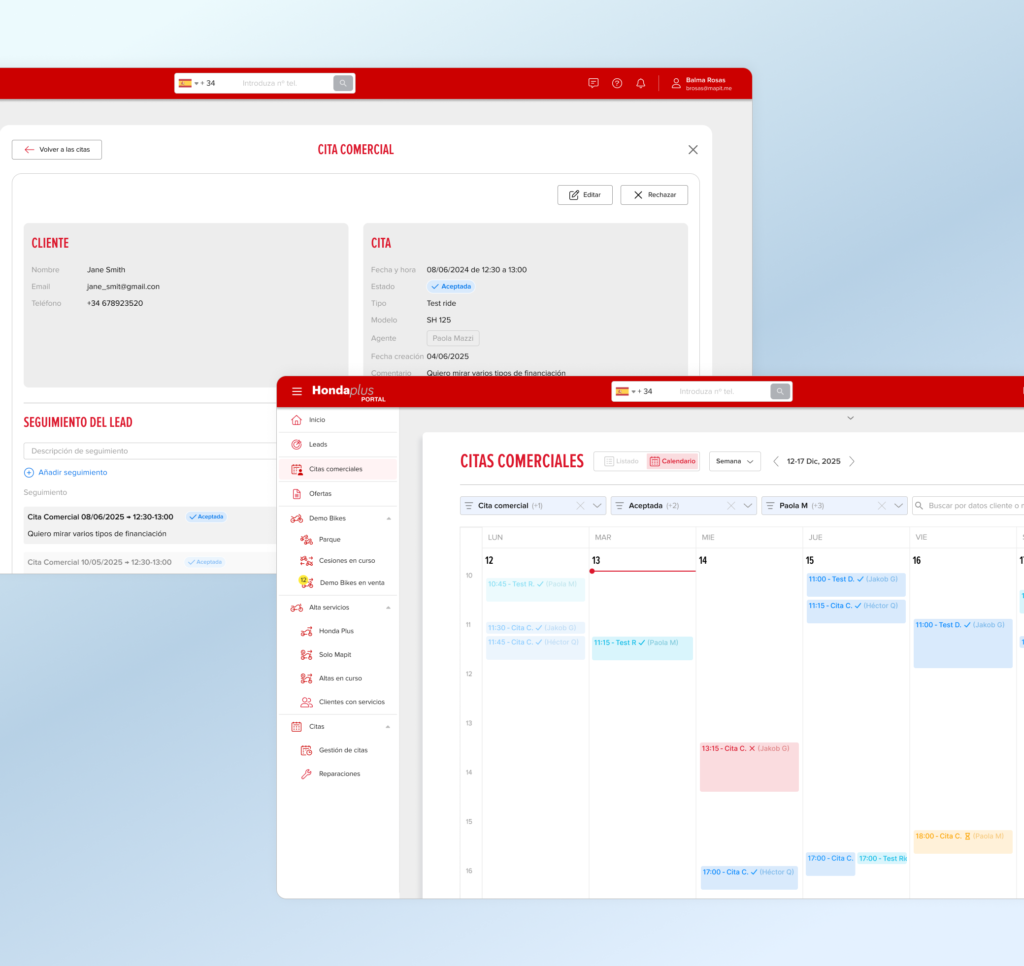
Honda dealerships were drowning in unqualified leads. This project does two things:
Qualifies incoming leads and adds a new, pre-qualified source
Gives agents one system to manage what’s left, from appointments and test rides to shared follow-up, on a single calendar.
Where this feature lives
The Honda Plus Portal is the operational tool Honda motorcycle dealerships use to run their day-to-day commercial and after-sales work.
Context
Dealerships are independently run businesses operating under Honda’s brand and guidelines, not branches of Honda itself. Each one has its own operational needs, and the general tools provided to run the network don’t cover all of them.
In practice, that means dealership staff work across several disconnected tools, re-entering the same data more than once and losing time to work that should be a single step. This feature lives inside that reality: it’s where commercial agents manage incoming leads and turn them into scheduled appointments and, eventually, sales opportunities.
What was going wrong
The signal didn’t come from one dedicated study, it came from general operational interviews and follow-ups on other features, all pointing at the same friction: how dealerships handled incoming leads.
6/8
Agents interviewed
Said the leads they receive aren’t qualified
8/8
Agents interviewed
Said they receive more leads than they can actually manage
5 vs 33%
Lead vs walk-in conversion
diference between a qualified and unqualified opportunity
10 days
Conversion time
Average time from lead arrival to sale
Unqualified leads piling up wasn’t the only problem. Leads already reached the Portal before this feature existed — they landed in a plain list. What that list didn’t give agents was any way to act on a lead without leaving the tool: no way to schedule a commercial appointment or test ride against it, no shared record of what had already been discussed, no visibility into which demo bike was actually free to offer for a ride.
The action plan
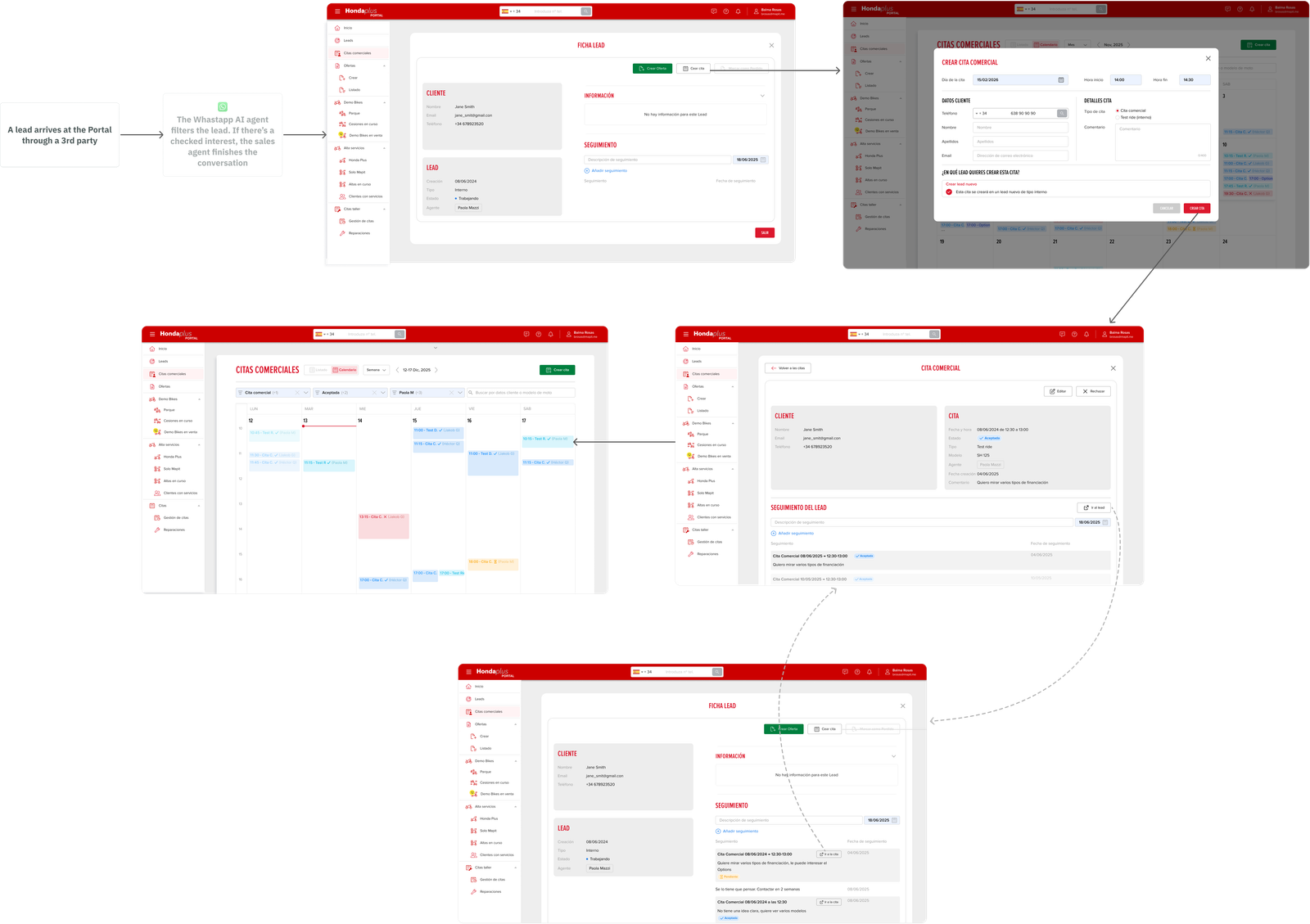
Two initiatives came out of this. One is an AI pre-filter: when a lead arrives, it’s routed through the dealership’s WhatsApp Business number, which runs a short automated exchange to check for real interest before it reaches an agent. Still in progress, not covered here.
This case study covers the other one, which works on two fronts at once. Both build on top of the lead listing that already existed in the Portal, neither replaces it.
Lead quality
Leads already arrived through third-party channels and Honda leasing, pre-qualified with an appointment scheduled. This feature adds a third source: appointments requested directly from the app, by people already engaged with the brand through it and their dealership’s workshop.
Lead management
Before this feature, a lead landing in the list had nowhere to go. Now every lead can have appointments and test rides scheduled against it, tracked on a shared calendar, with comments shared between the lead and every appointment tied to it.
The solution
A lead's new life, all inside the Portal
Now all the information lives in the Portal, allowing sales agents to have a bettter understanding of the process, tracking and using available data
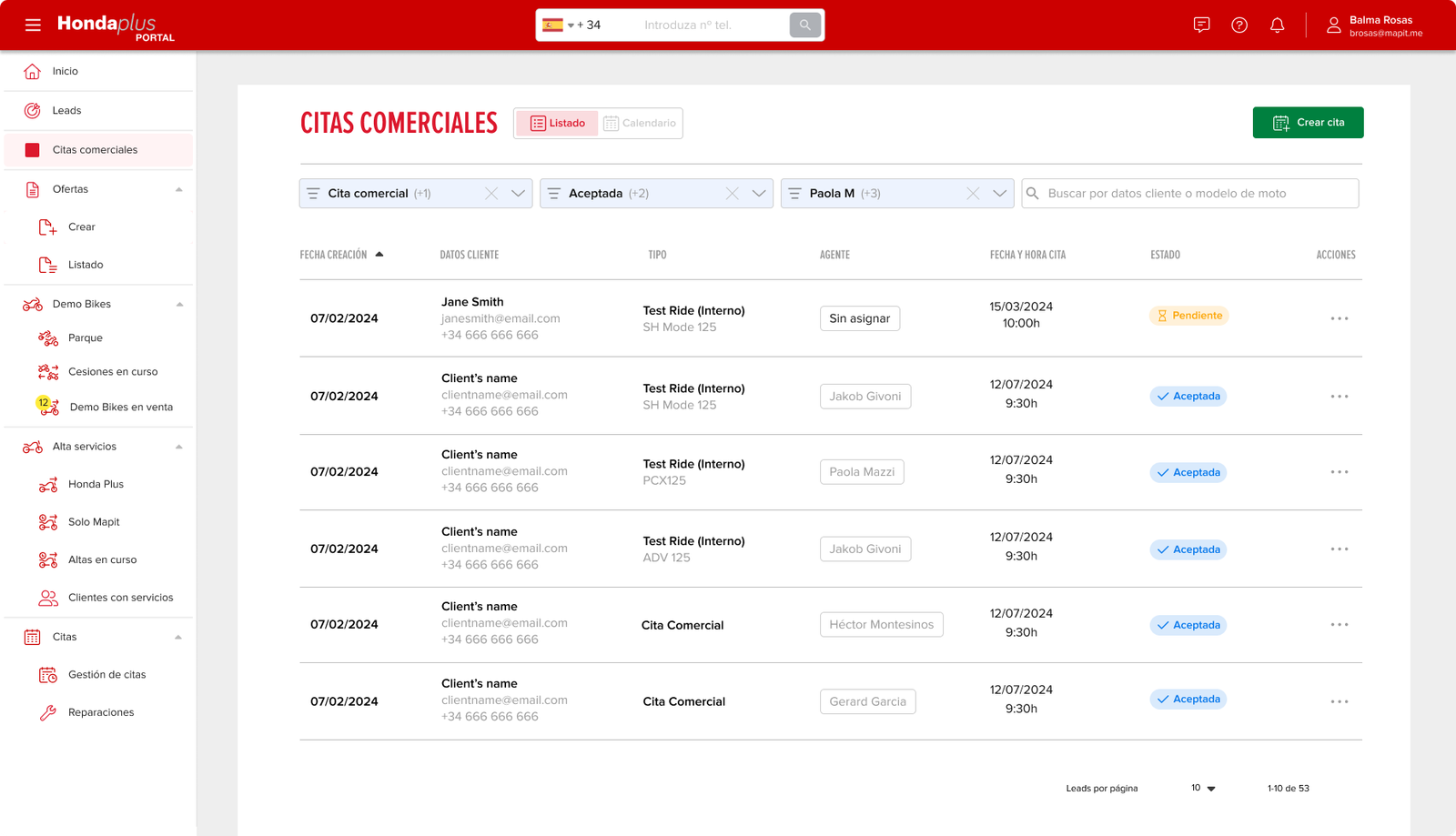
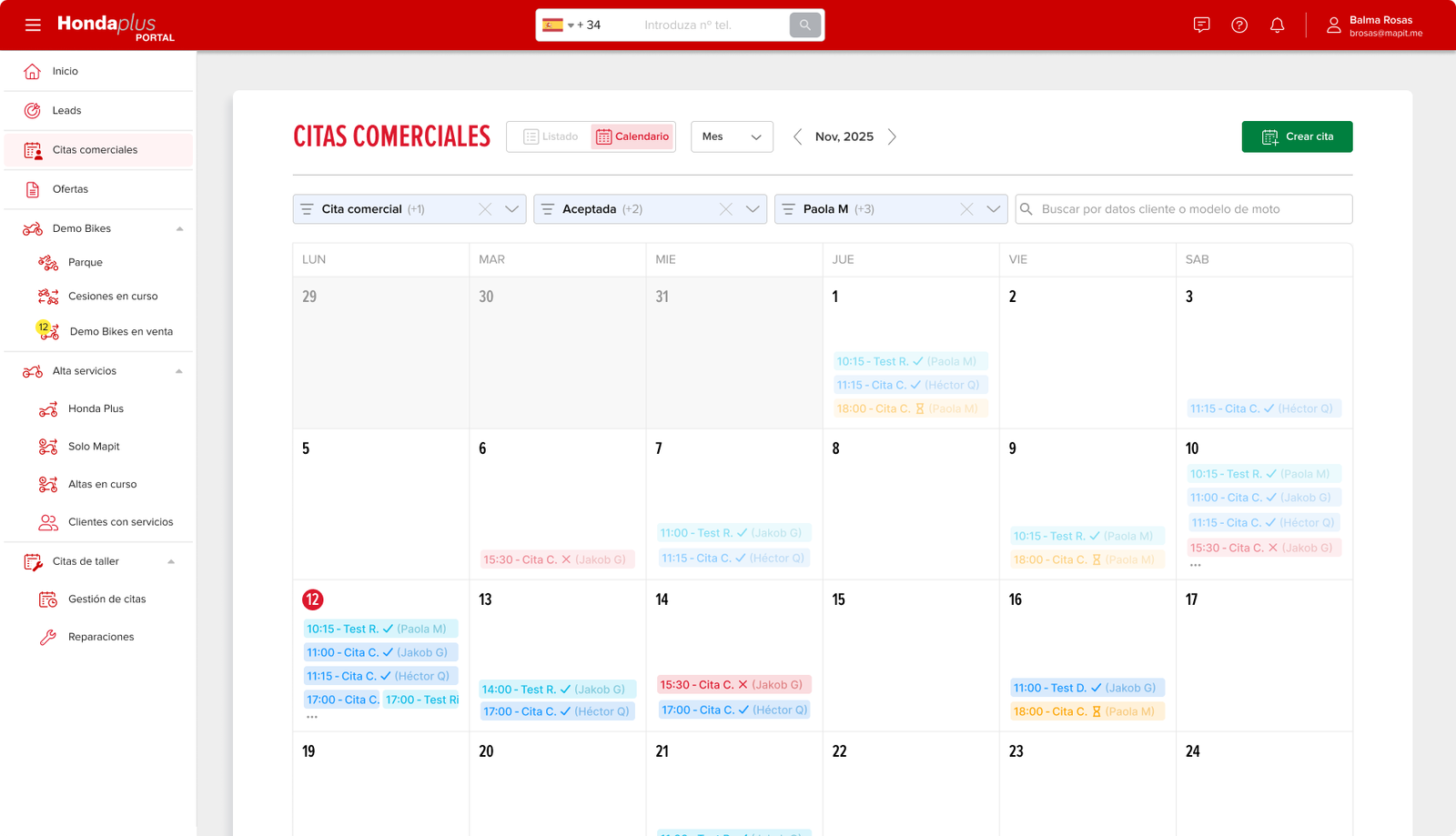
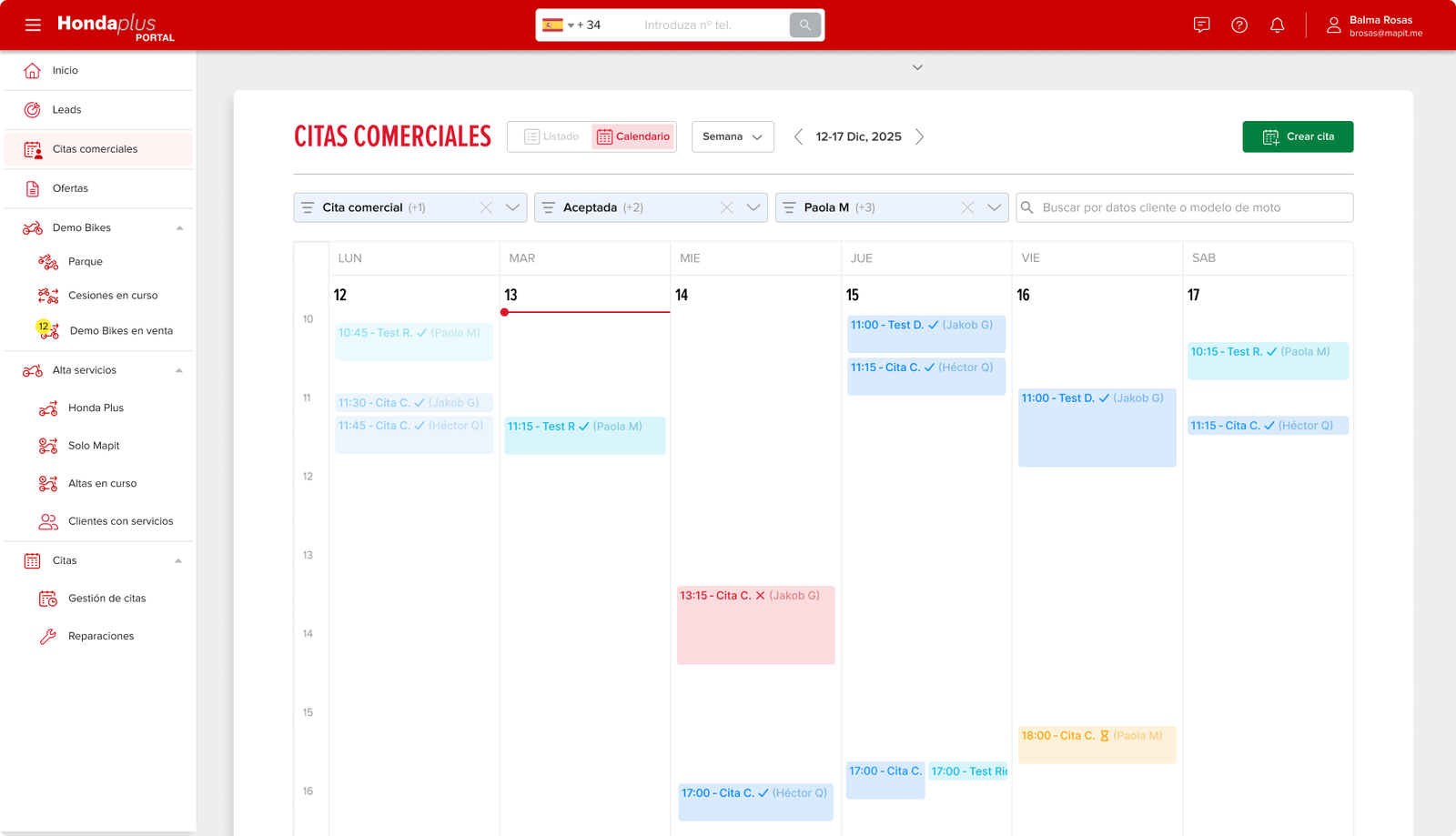
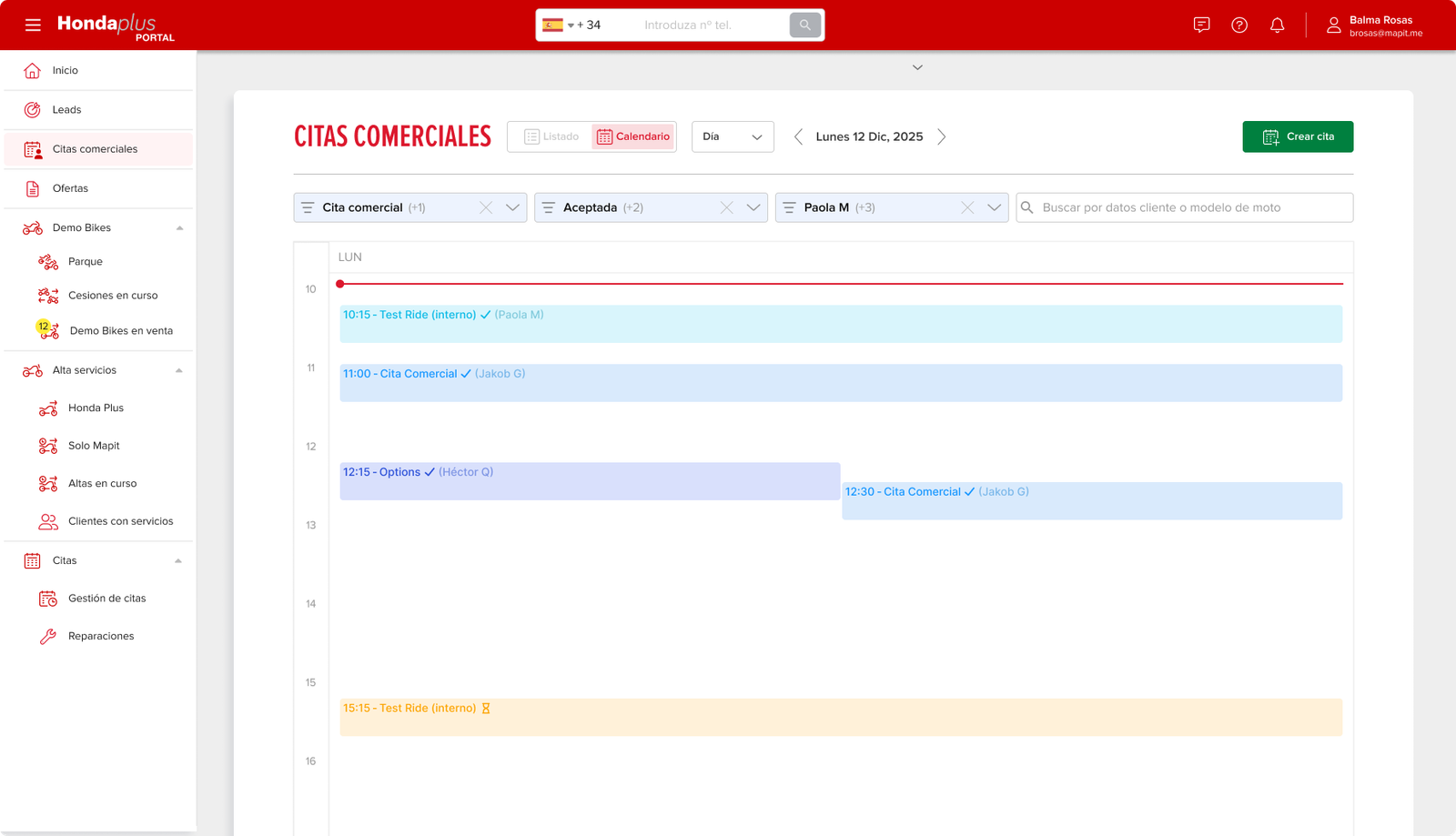
Agents keep the table view they’re already used to (still the fastest way to search for something specific) plus three calendar views on top of it: monthly, weekly, and daily. Filters narrow any of these down fast: their own appointments only or the whole team’s, by motorcycle model, by status (pending, accepted…), and more.
List view
Calendar view
Monthly view
Weekly view
Daily view
Product decisions
What makes this project complex isn’t any single piece, it’s connecting all of them: client history and their leads, the motorcycle fleet and what’s actually available, and every scenario a lead can arrive under and evolve. What follows covers how some of those cases is handled, not just the common ones.
New pre-qualified leads
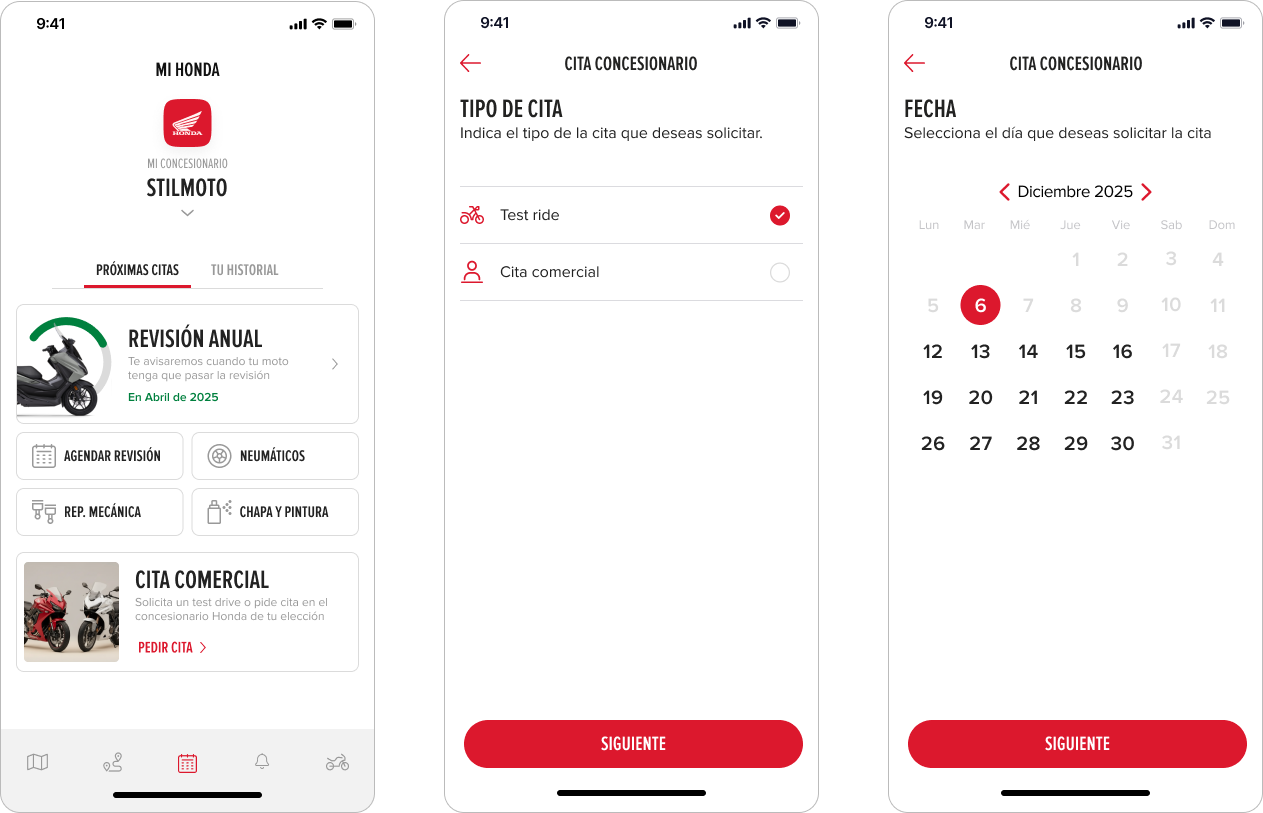
This is a new kind of lead, created directly from a commercial appointment or test ride booked by a client through the Mapit app, rather than passed in by a third party.
App-originated leads come from two overlapping groups: people who are already Honda customers, and people who’ve engaged with the brand for years through the app itself. That prior relationship is what pre-qualifies them, in a way a third-party lead never is.
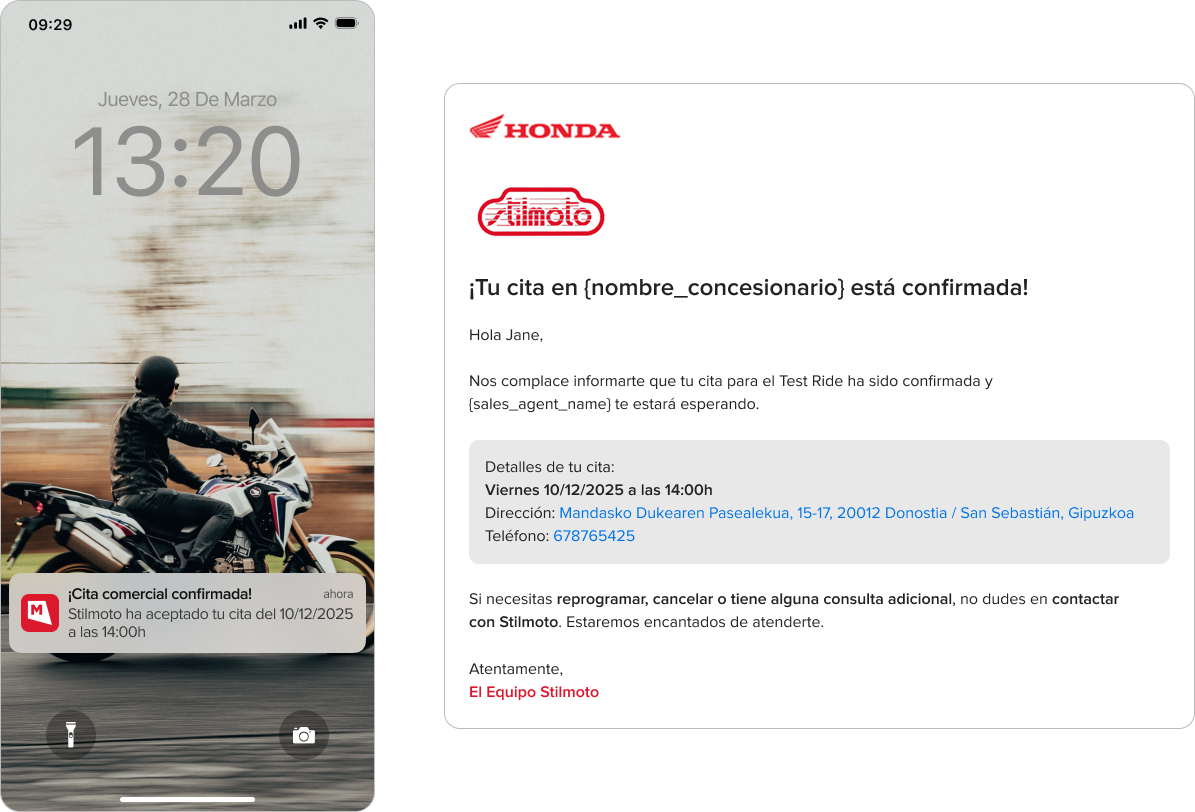
A client books an appointment from the app
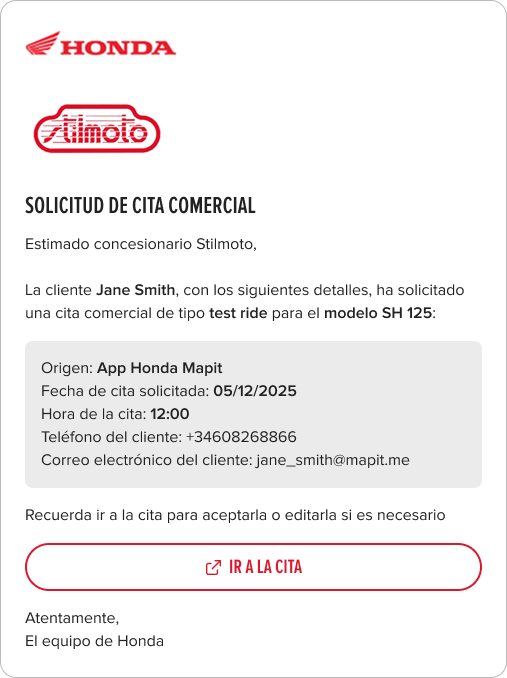
The agents receive an email
The client receives a confirmation (push + email)
The agent is taken to the Portal to accept the appointment, which is self assigned to them
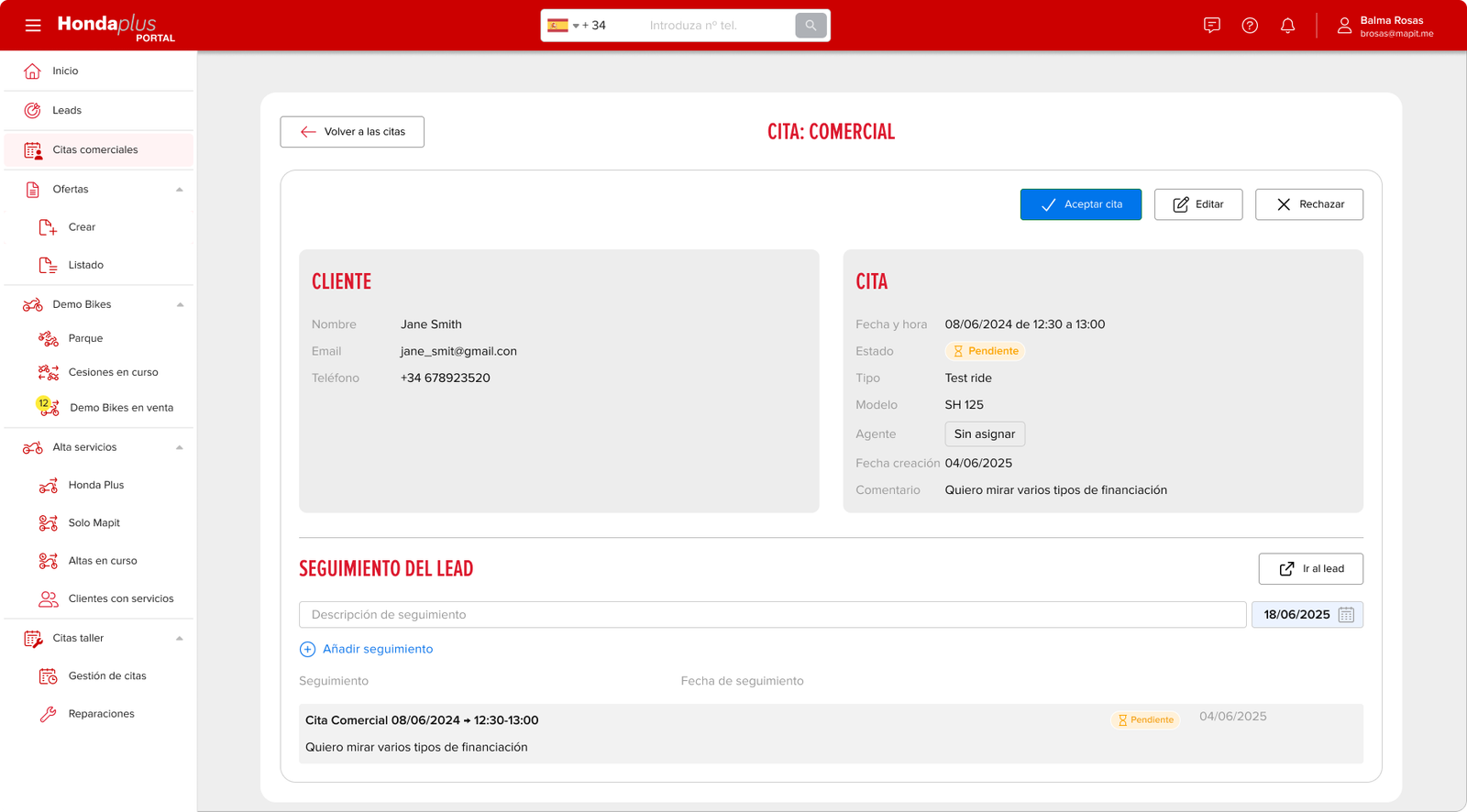
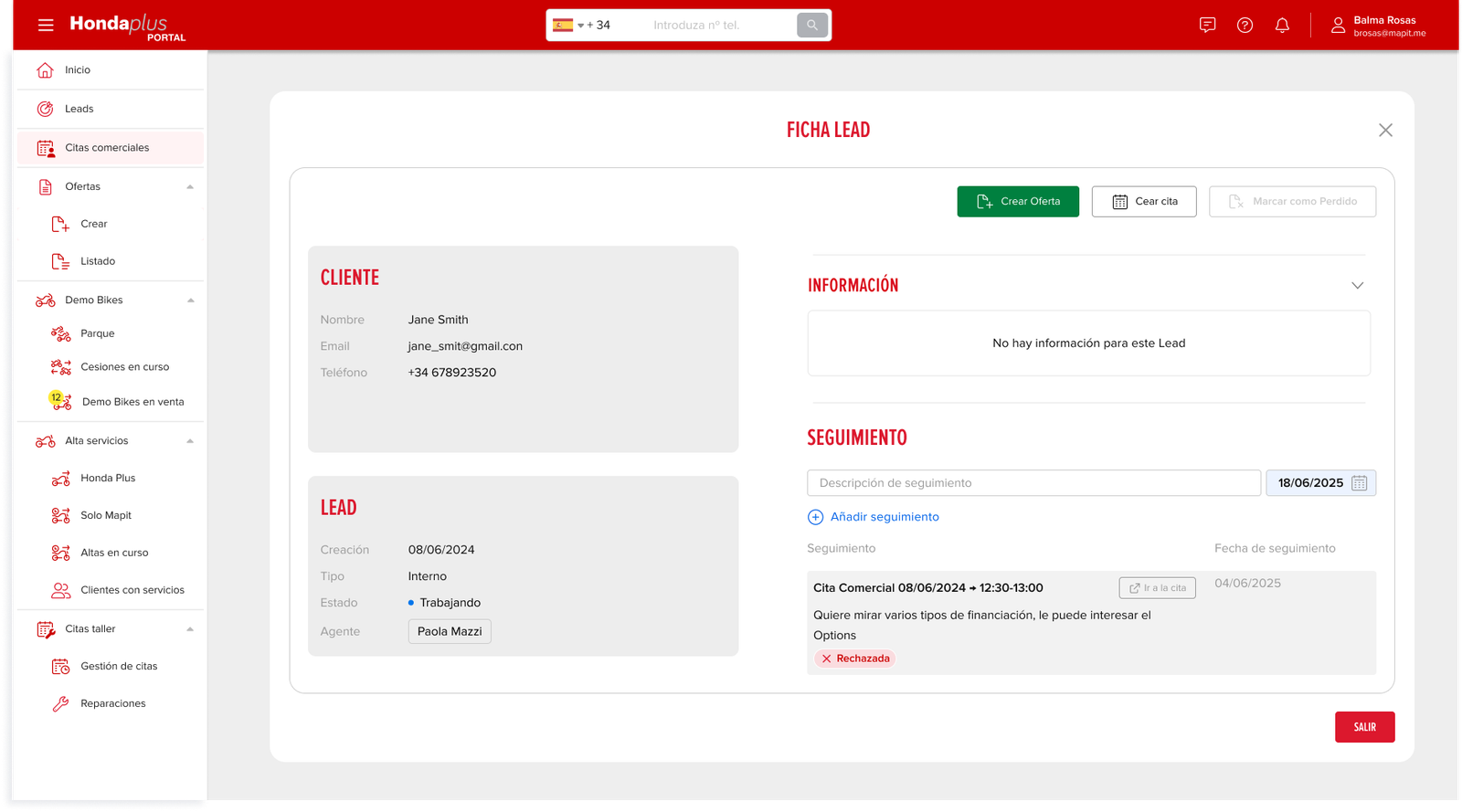
The link between lead and appointment
Shared history between a lead and its appointments
Now the agent will be able to track all the appointments linked to a lead and the follow up comments. Which are shared between both entities
Appointment detail
Lead detail
Entry points
An appointment can be created at any point of the journey, so it should have a direct entry point form each of these steps:
From the appointments page/calendar -> where they can see their whole agenda and pick the right slot
From the lead detail-> where they will be able to see all the appointments attached to that lead and the follow ups
From the offer -> sometimes clients keep going back to the dealership after the offer has ben extended or even accepted
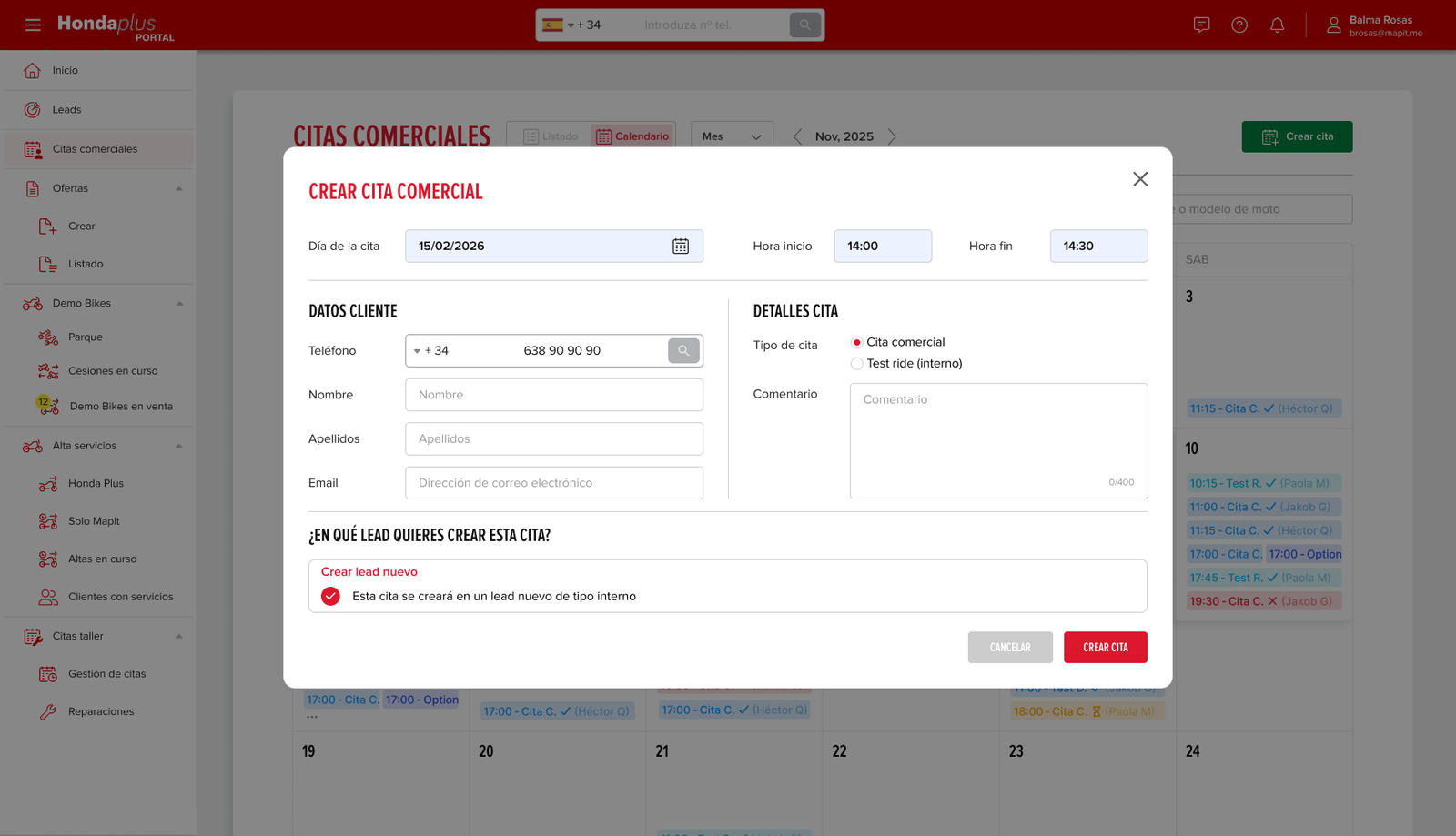
New lead, or one already open?
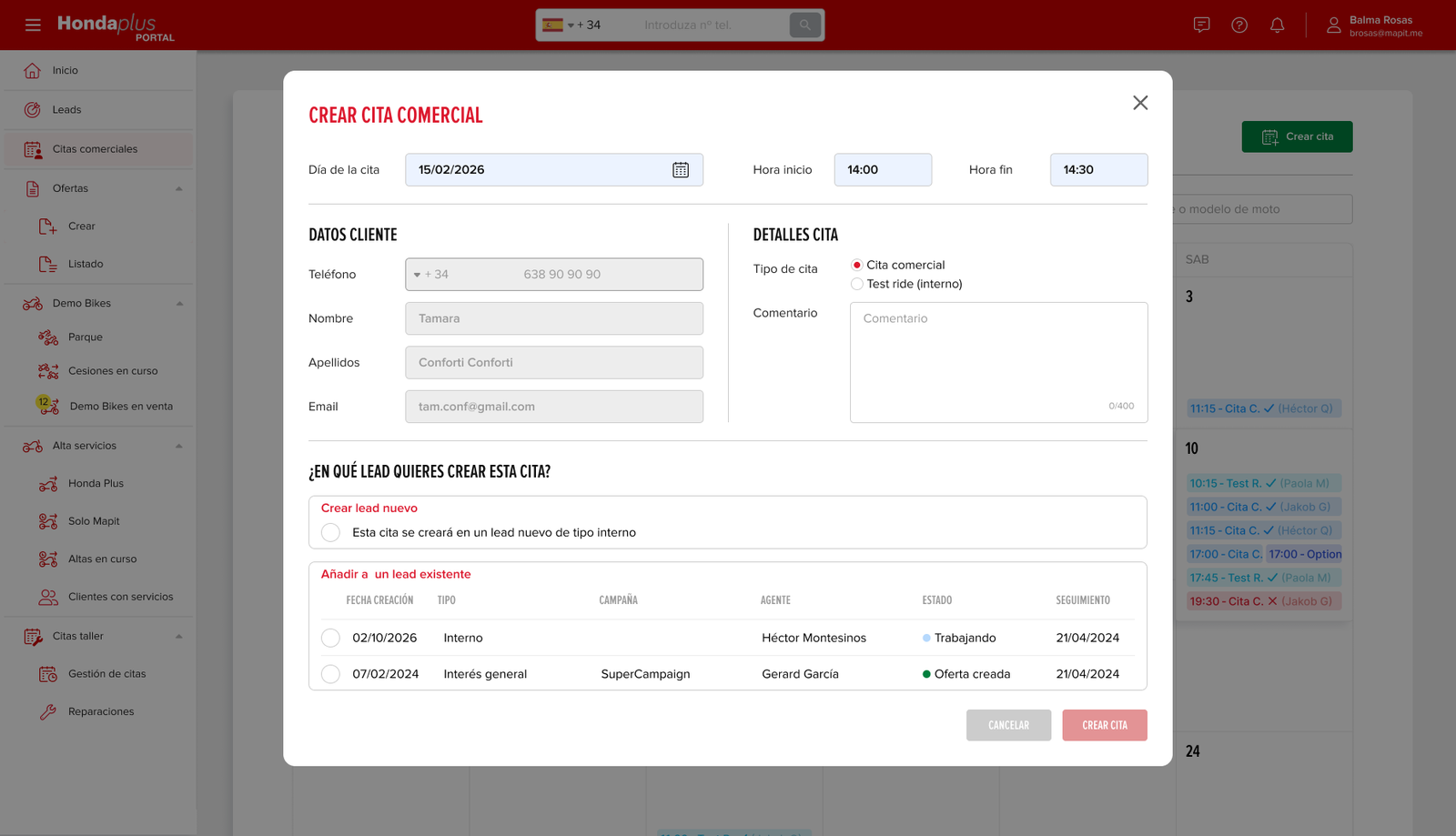
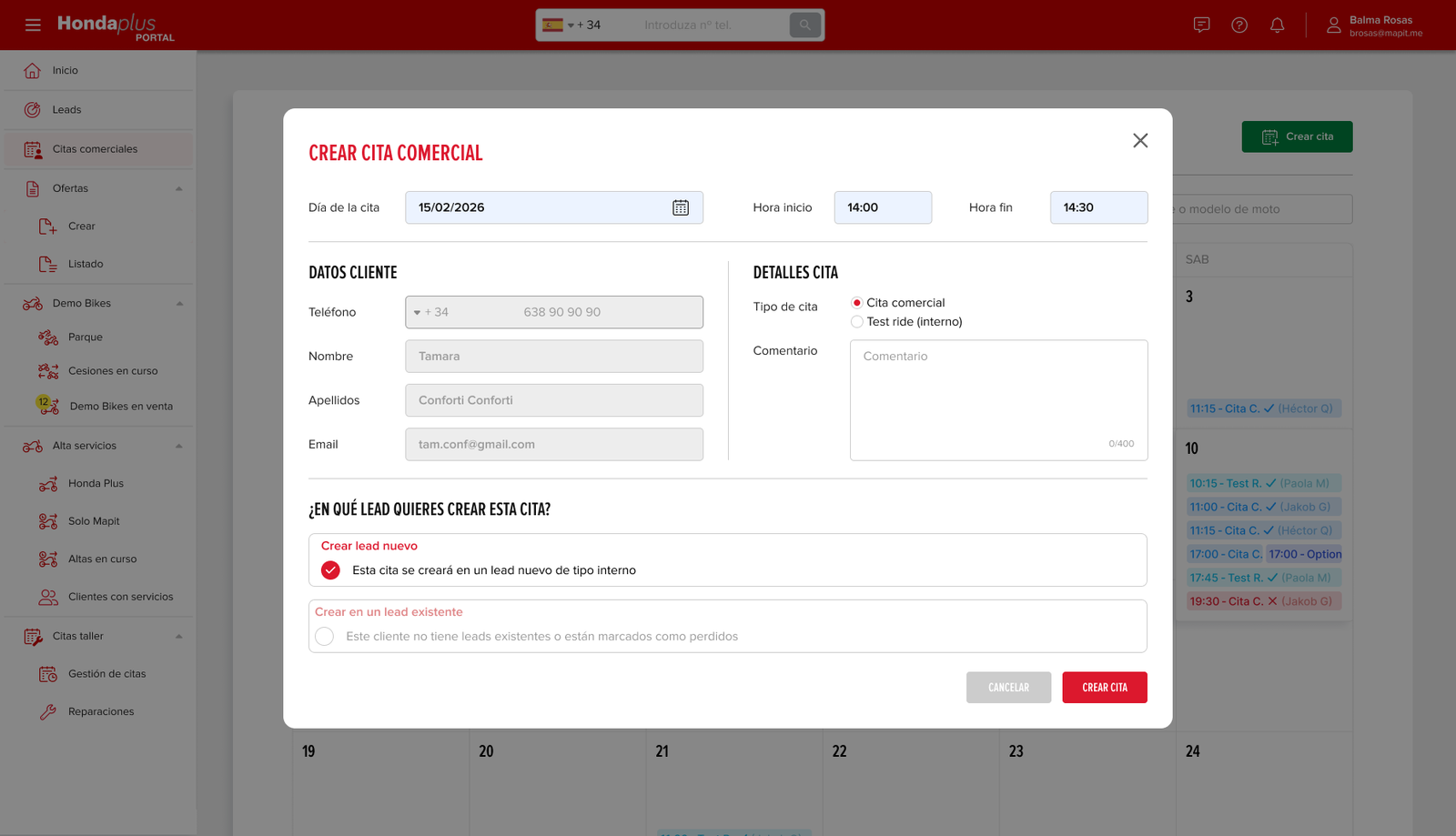
Client details and appointment specifics are captured in one modal, and a lead is created underneath it automatically. When a client has history, the agent chooses directly: start a new lead, or attach this appointment to one still open.
There’s 3 options depending on the client’s history:
New client
The appointment directly creates a new lead
Existing client with leads
Te agent can choose wether to book it inside a lead or to create a new one
Existing client without leads
If the client has no leads or they are too old, the agent is informed, and the booking creates a newone
Promoting adoption
To drive adoption at launch, I connected the calendar to a lead type that already comes with an appointment attached: the Honda leasing lead.
These leads are generated when a client’s leasing period ends, a moment with a real chance they’ll buy a new bike, which is exactly why agents already pay close attention to this lead type. Loading these appointments into the calendar automatically gave agents a concrete reason to open it, work through what was already there, and get used to the new tool along the way.
Measuring success
The project is still under completion, and the incoming features will have a more direct impact on business metrics, but some current metrics were very clear that we were on the right track.
93
Appointments created in the 1st week
Currently there’s an average of 500 appoitnments cerated per month in the Portal
47%
Conversion rate of new app leads
The highest conversion rate of all lead types
9,5
Days to conversion
This is still a modest improvement, we expect it to move further with the Whatsapp automation
What's next?
Scope and the complexity of the rest of the project meant one feature had to wait, even though it could matter a lot for adoption, and for getting dealerships to finally leave their other tools and run everything through the Portal: letting agents import events from sources like Outlook or Gmail.
This still needs real research and ideation before it’s ready to design. Dealerships are still using their old tools alongside ours, and the open question is why: what are those tools giving agents that the Portal doesn’t give them yet? That’s what needs answering before import itself is worth building.
One early idea: a flexible import method where agents define their own categories through a guided AI prompt, and those categories live directly on the calendar.